Magdesigns®
← All work

eC+ · Fintech · Concept proposal

Smart Repayment Guard

The product is good at “how much can I take?” and silent on “should I?”. The dangerous moment isn’t applying for credit — it’s the repeat withdrawal under stress. This proposes a context-aware safety layer that surfaces the future cost of a withdrawal without blocking the user.

Concept / proposal — not shippedSenior Product Designer — self-directed, end to end.
Role
Sr. Product Designer
Client
eC+
Domain
Fintech
Type
Concept / proposal
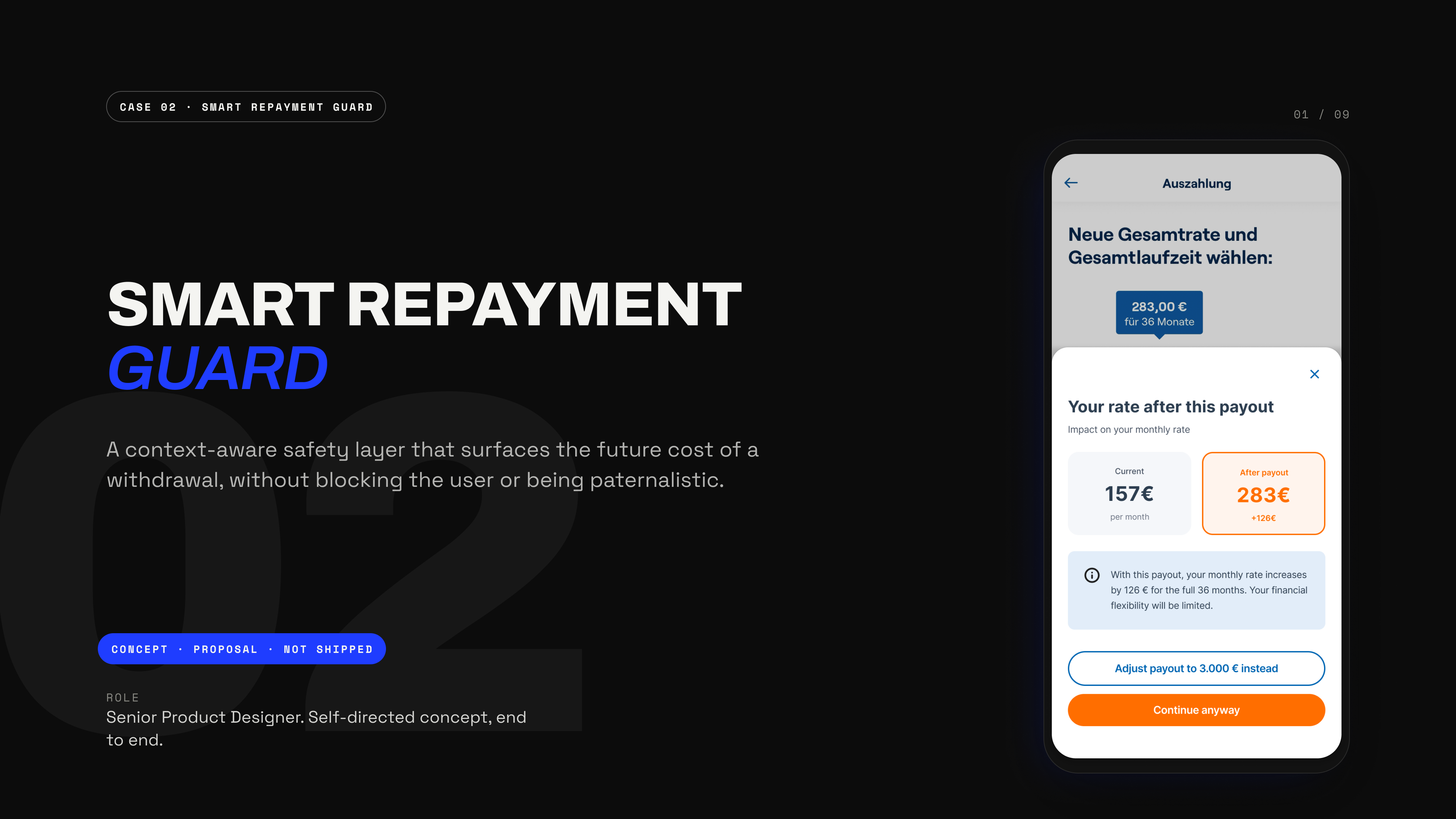
Cover — Smart Repayment Guard, concept / proposal, not shipped; a context-aware safety layer that surfaces the future cost of a withdrawal without blocking the user
01Cover
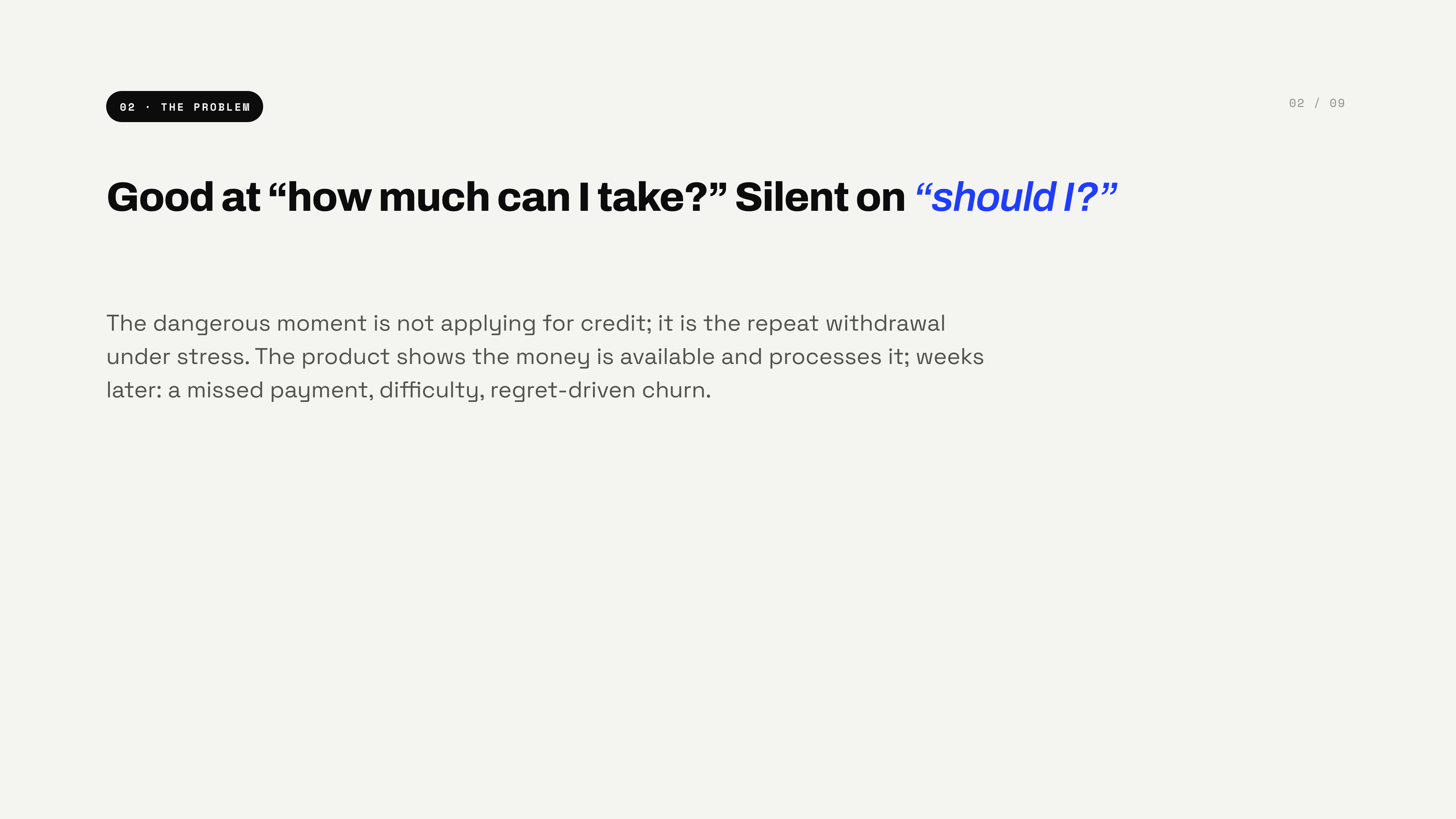
The problem — good at “how much can I take?”, silent on “should I?”; the dangerous moment is the repeat withdrawal under stress, not the credit application
02The problem
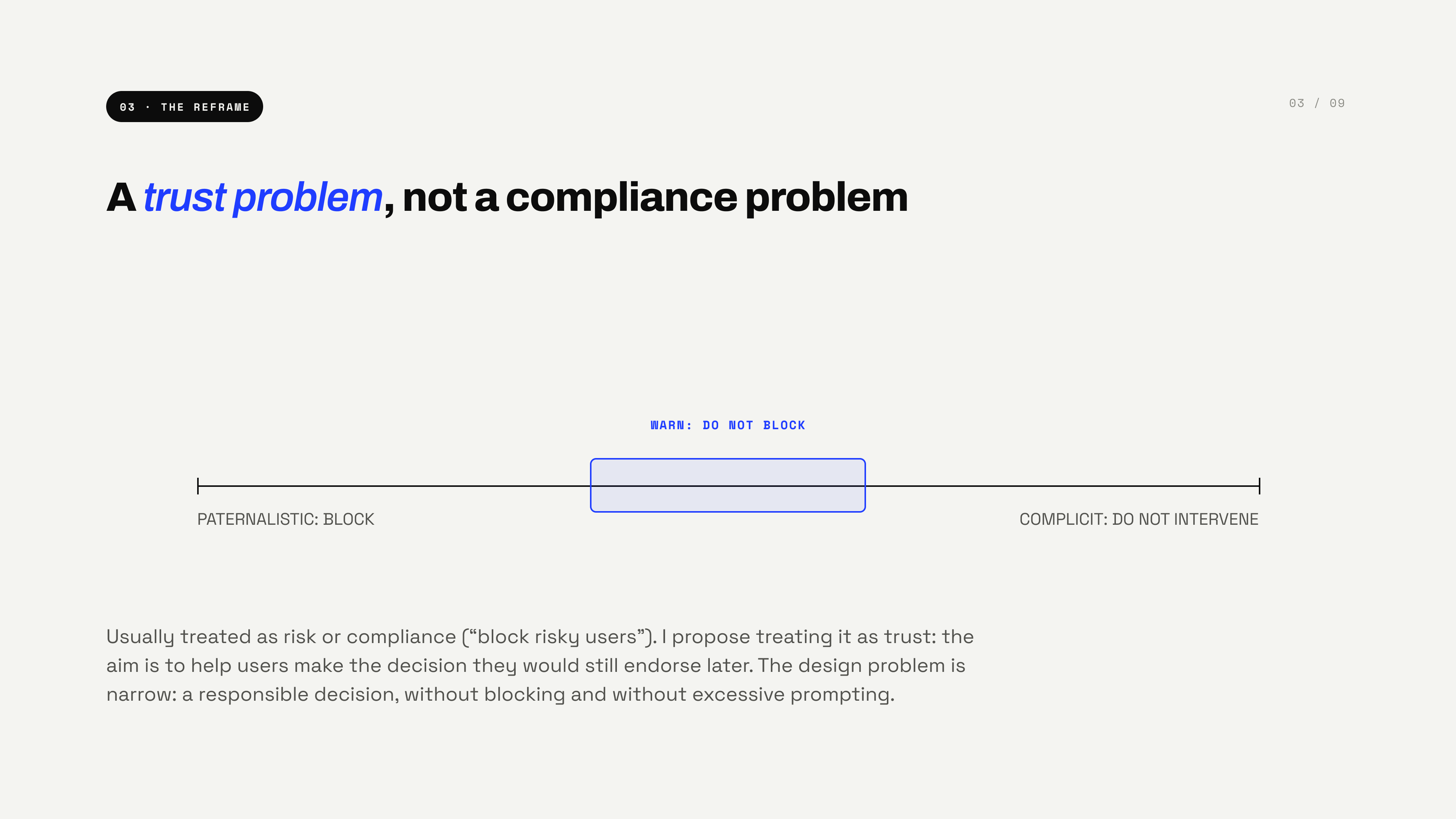
The reframe — a trust problem, not a compliance problem, positioned between paternalistic blocking and complicit non-intervention, aiming to warn without blocking
03The reframe
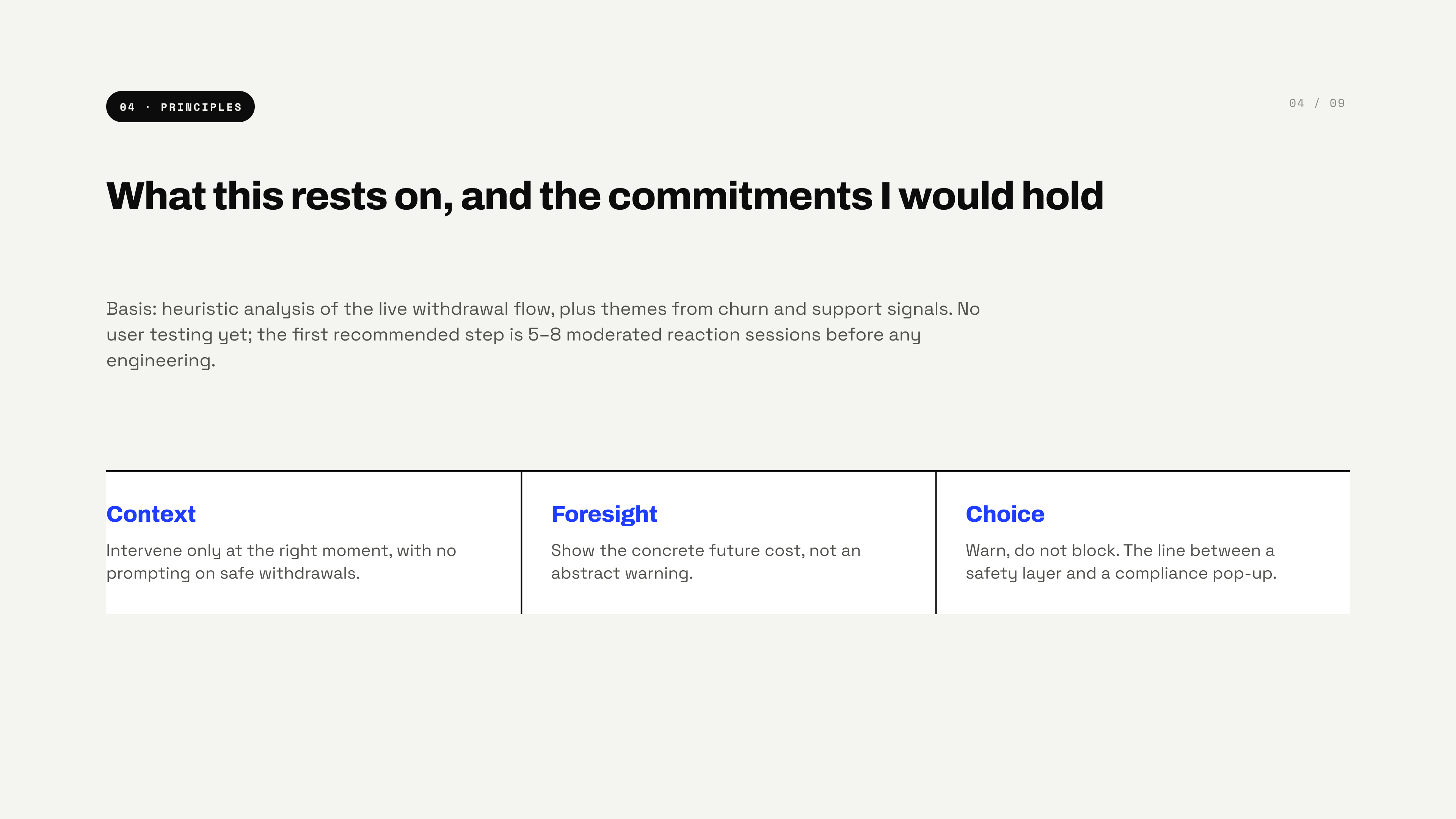
Principles — based on heuristic analysis of the withdrawal flow plus churn/support signals, with three commitments: context, foresight, and choice
04Principles
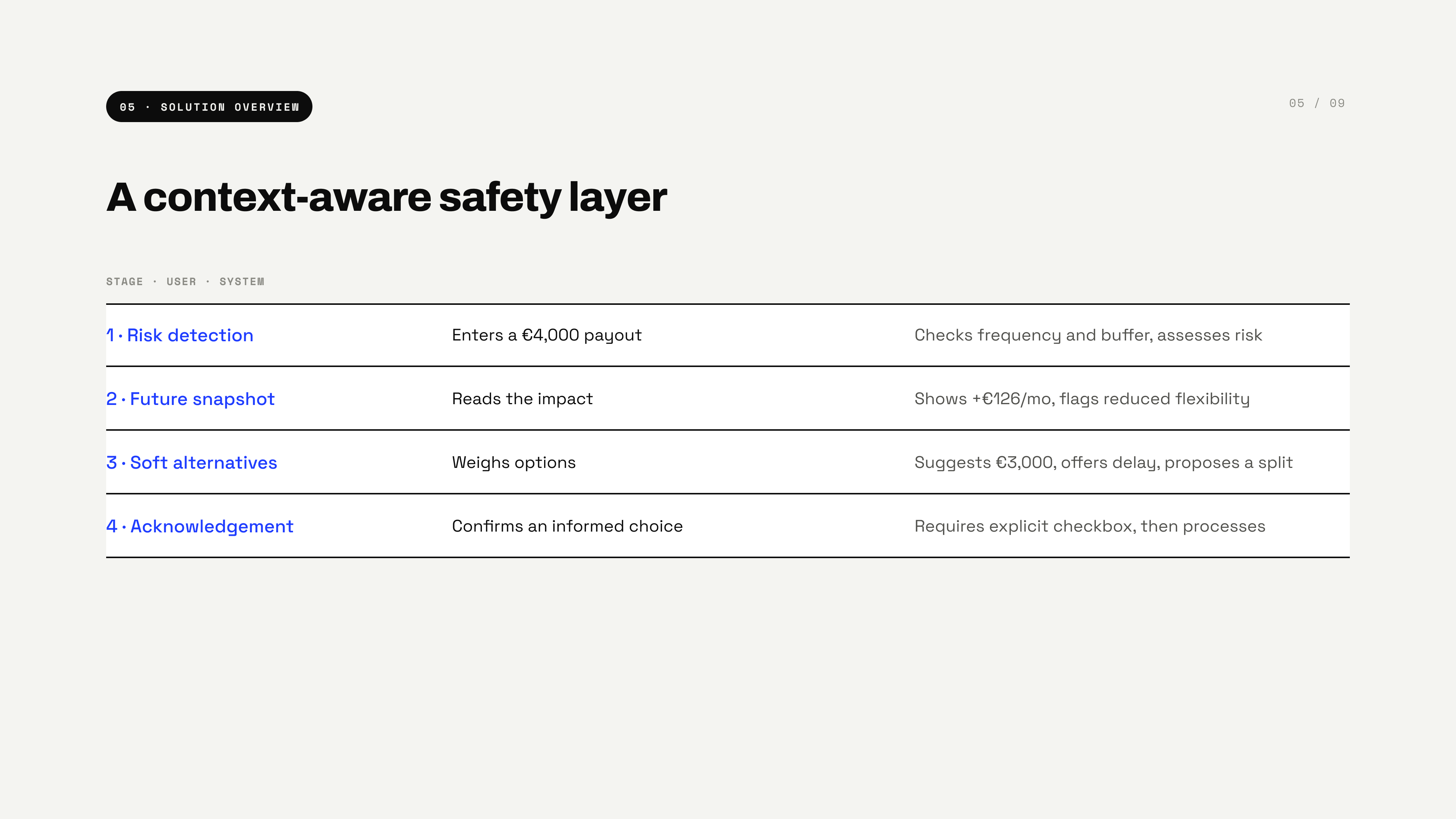
Solution overview — a four-stage flow: risk detection, future snapshot, soft alternatives, and acknowledgement, with the user and system action at each stage
05Solution overview
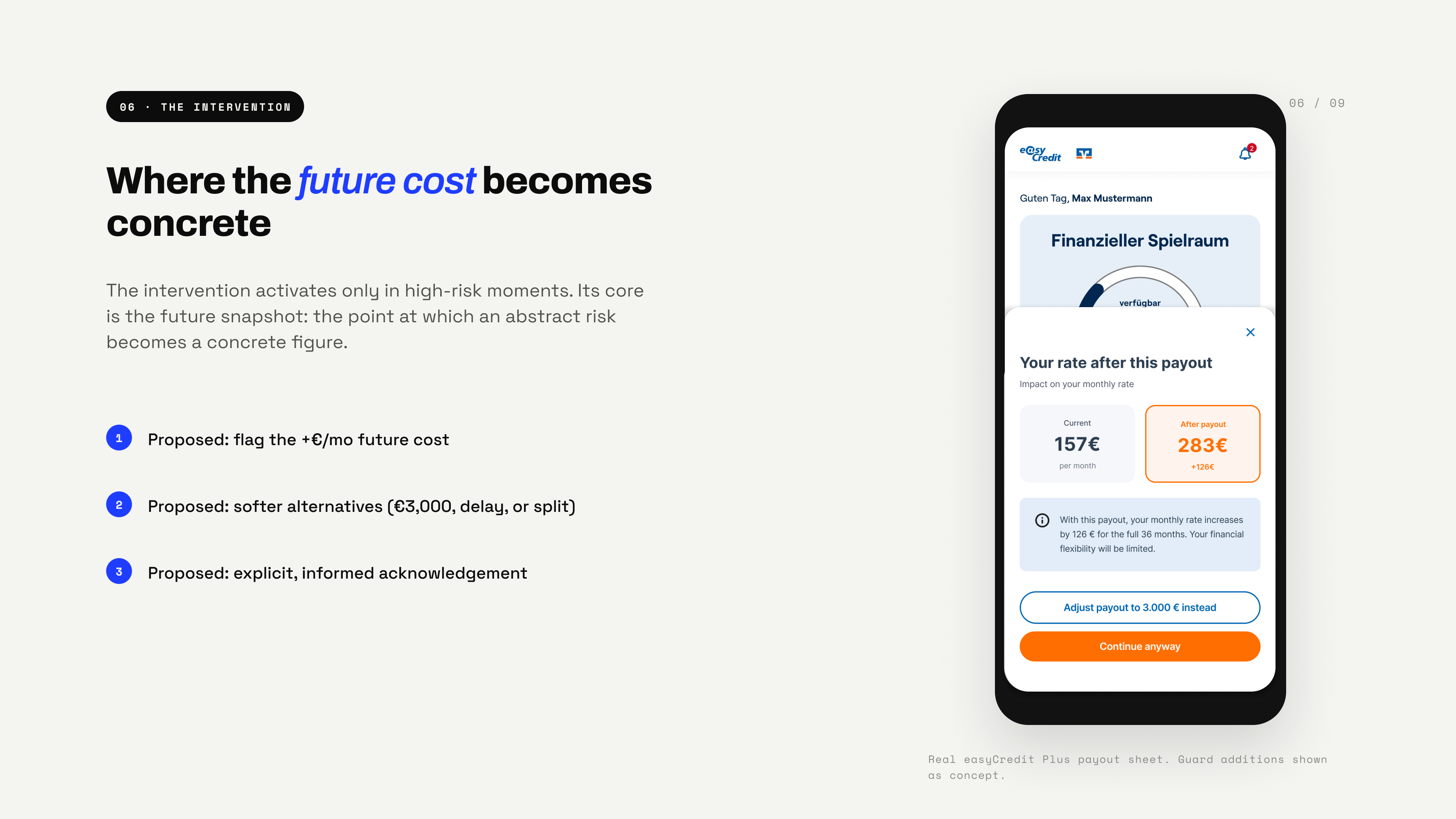
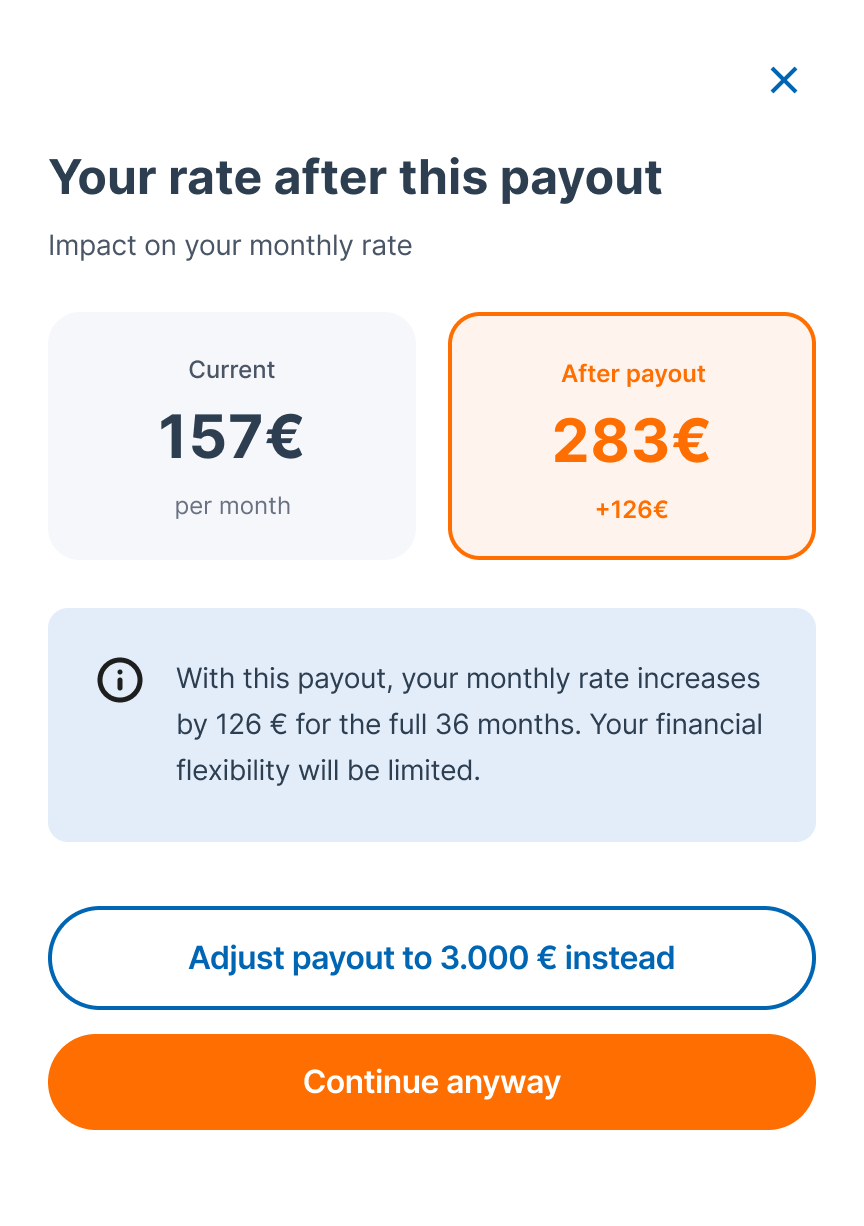
The intervention — a future-snapshot overlay on a real easyCredit Plus payout screen shows the rate rising from 157€ to 283€ (+126€) after the payout, with softer alternatives offered
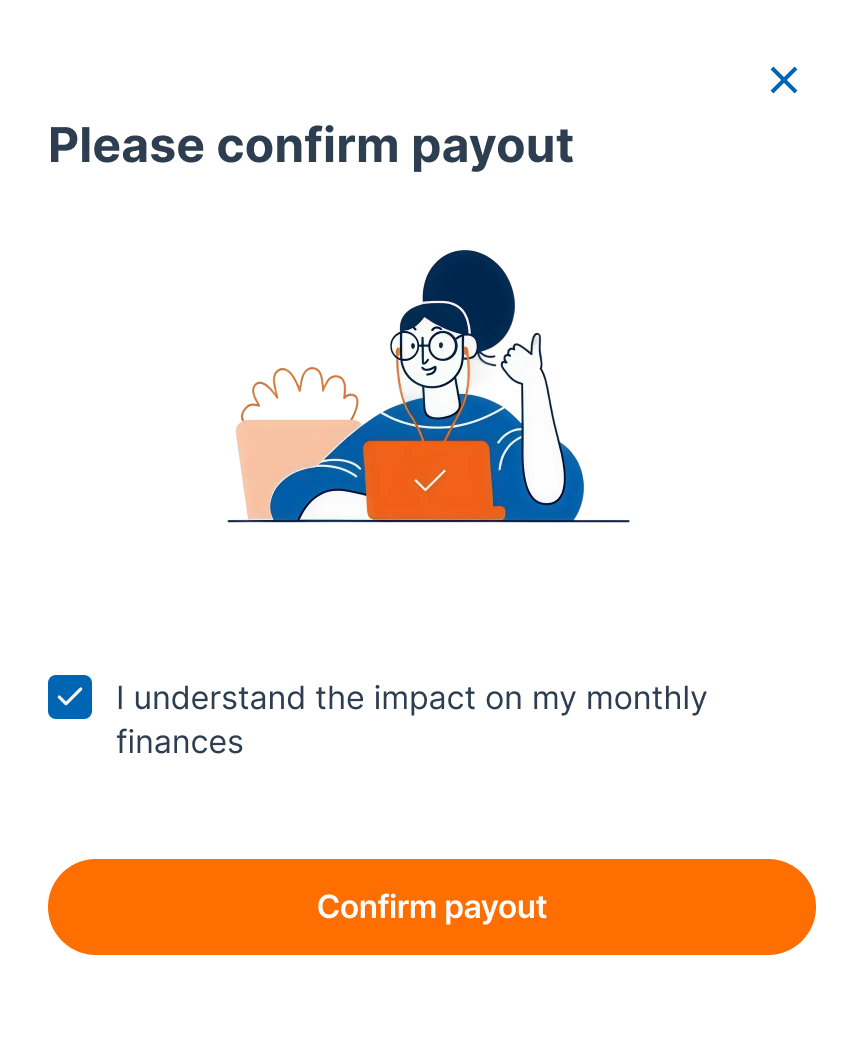
Your rate after this payout — 157€ rises to 283€, +126€ for 36 months Please confirm payout — I understand the impact on my monthly finances
06The intervention
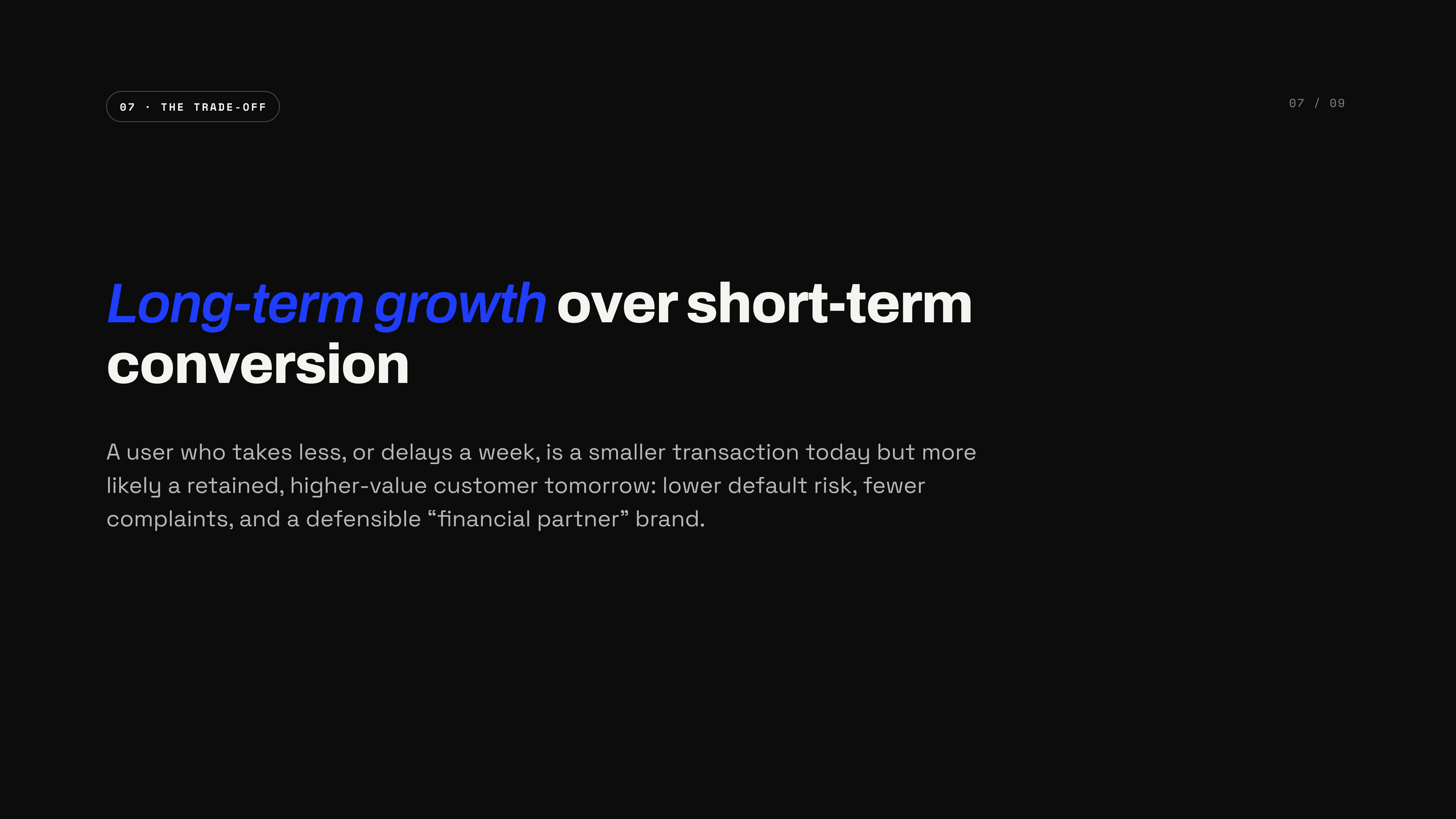
The trade-off — long-term growth over short-term conversion; a smaller withdrawal today favors a retained, higher-value customer tomorrow
07The trade-off
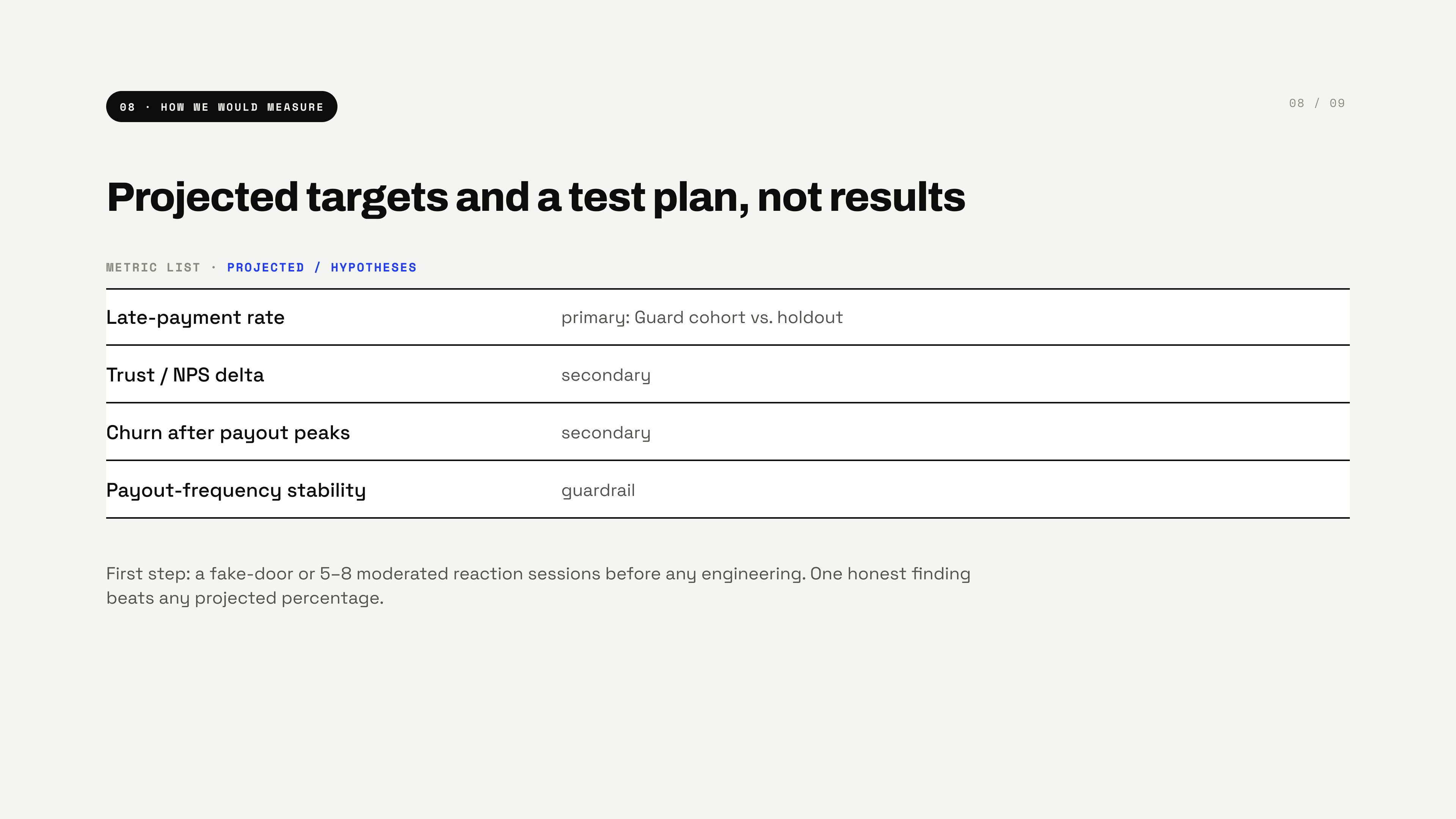
How we would measure — projected targets and a test plan, not results, tracking late-payment rate, trust/NPS delta, churn after payout peaks, and payout-frequency stability
08How we would measure
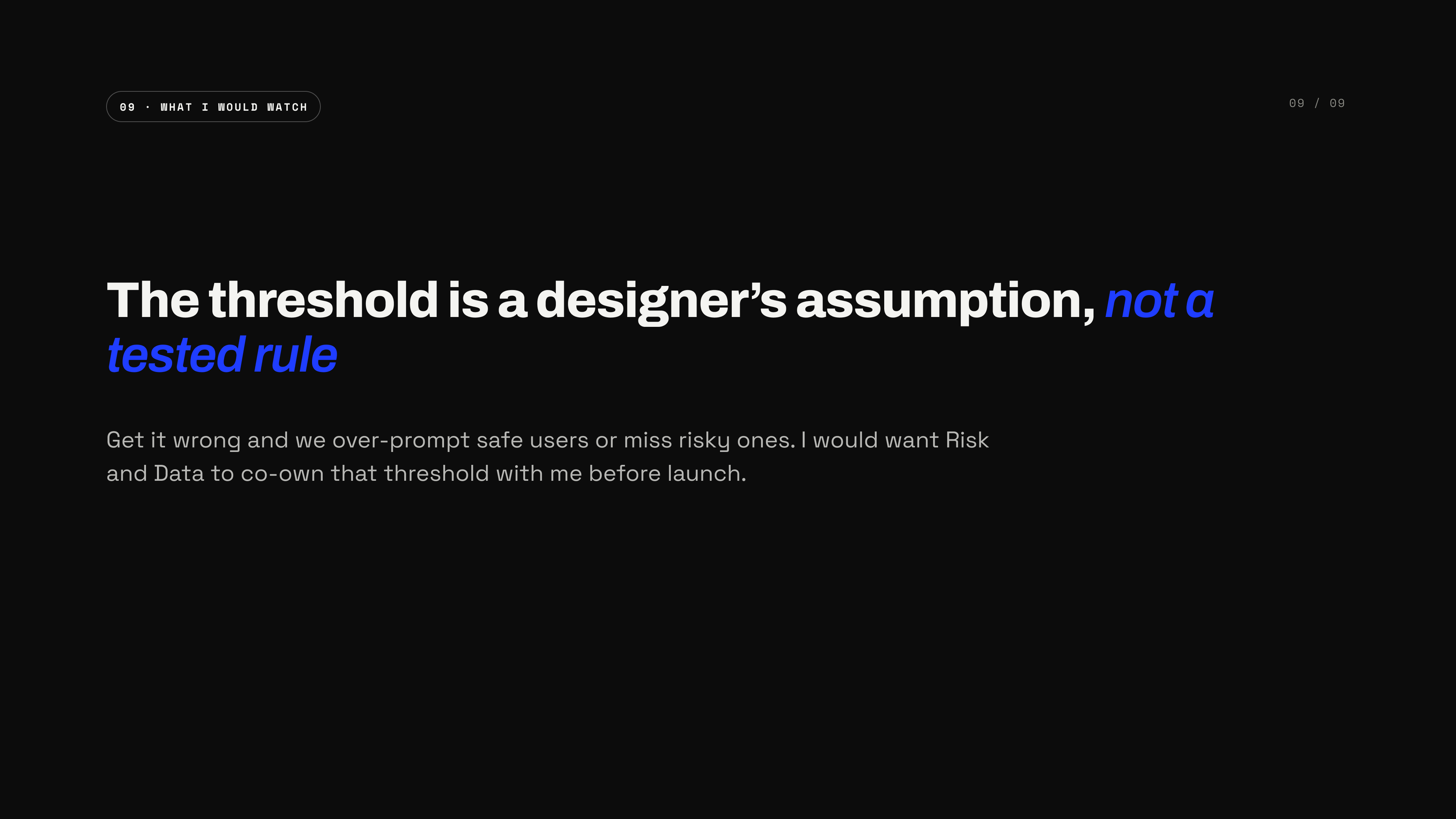
What I would watch — the risk threshold is a designer's assumption, not a tested rule, so Risk and Data would co-own it before launch
09What I would watch